
Process
From idea to iron.
We talk about what you need.
Every piece begins with an email or a phone call. What will it do? Where will it live? Whose hand will hold it? A good commission is almost always half conversation and half iron. Rough sketches, reference photographs, and stories about the object it will replace are all welcome.
A drawing, a quote, and a handshake.
A measured drawing follows - with dimensions, steel choices, materials for handles or hardware, and a firm timeline. Once you approve it, the shop time is reserved. The drawing becomes the contract. Anything that changes, changes together.
The iron meets the fire.
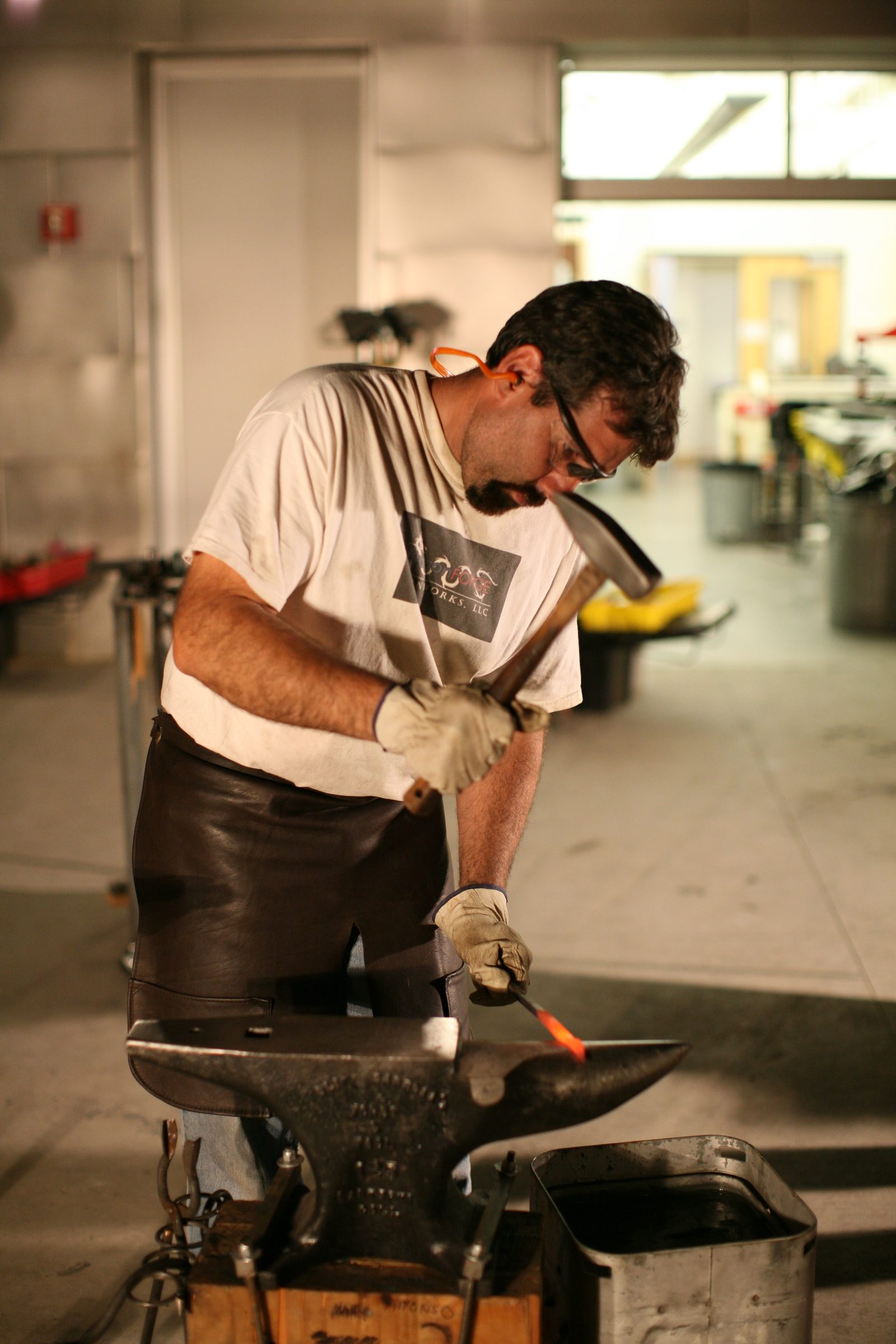
Steel is drawn from billet, heated to a pale orange near 2,300°F, and shaped on the anvil over as many heats as the piece requires. A blade may take 40 heats; an estate gate takes thousands. Progress photographs go out roughly once a week. You will see the piece take its shape in real time.
The steel is tempered and dressed.
For blades: normalised, quenched, tempered in the shop oven, and tested for hardness. For ironwork: wire-brushed, waxed or linseeded to the customer's preference. Handles are fitted, hardware riveted, finish decided together. Nothing leaves until it passes a morning I don't like the look of it.
Delivery to its new home.
The piece is crated and shipped, delivered by hand within the region, or installed on site for architectural work. It arrives with signed provenance and care notes appropriate to the steel and finish, so you know how to look after it from day one.
On timelines
Why good ironwork takes the time it takes.
Heat
Steel can only be moved in a narrow window of temperature. Each heat lasts 30–90 seconds at the anvil. A single knife takes 40–80 heats. A gate bar takes hundreds. There is no speeding this up.
Rest
Between hot work, steel needs to normalise. Grain structure settles. Stresses release. Skipping this makes weaker work that fails a decade later. Waiting is part of the craft.
Attention
A single-smith shop produces slowly by design. Only one piece is in progress on the anvil at a time. This is what keeps the work honest.
Ready when you are.
The first conversation costs nothing and obligates nothing. Send us a note and we'll find time this week.